[Guide] Rotary Screw vs. Reciprocating Compressor: Which Is Right for Your Work Truck?
Choosing between a rotary screw and a reciprocating compressor is not a question of which technology is better in the abstract. It is a question of how your truck works in the field. The wrong compressor shows up fast: tools that bog down mid-job, systems that overheat on long runs, tanks that cannot keep pace with demand, or a truck bed eaten up by equipment that could have been packaged differently.
This guide cuts through the spec-sheet noise and frames the decision the way work truck buyers actually need to make it — around duty cycle, tool demand, truck packaging, and total cost of ownership.
Key takeaways before you read:
- The single most important factor is duty cycle: how long your crew runs air tools without stopping.
- Rotary screw compressors deliver continuous, on-demand air for heavy continuous use. They offer high volume air and are quieter and cooler than reciprocating compressors. Reciprocating compressors are better suited to short bursts of air demand with recovery time between uses with lighter duty cycles.
- Neither type is universally better. The right answer depends on your application, your truck layout, and how your crew actually works.
Rotary Screw vs. Reciprocating: The Fast Answer
Both compressor types are widely used in work truck applications. Here is how they differ at a glance.
| Factor | Rotary Screw | Reciprocating |
|---|---|---|
| How it works | Meshing helical rotors compress air continuously | Pistons compress air into a receiver tank |
| Duty cycle | 100% — runs continuously without stopping | ~60% — requires recovery time between uses |
| Typical CFM range | 10 to 1,500+ CFM | 30 to 60 CFM in most mobile setups |
| Operating temperature | 180–210°F | 300–400°F |
| Air delivery | Immediate, on-demand | Dependent on tank capacity and recovery |
| Upfront cost | Higher | Lower |
| Best fit | Continuous or high-demand air use for heavy-duty applications | Intermittent, short-burst tool use for light-duty applications |
The core distinction is simple: rotary screw compressors are built to run. Reciprocating compressors are built to recover. Neither is the wrong answer — but putting the wrong one on the wrong truck creates real productivity problems that show up every day in the field.
The 5 Buying Factors That Actually Decide It
Most compressor comparisons stop at specs. For work truck buyers, the decision comes down to five practical factors that reflect how the truck will actually be used.
1. Duty Cycle: Your First Filter
Ask how long your crew runs air tools in a typical shift. “Continuously” or “most of the day” points to rotary screw. “Short bursts with time between uses” points to reciprocating. Running a 60% duty cycle compressor at 100% is how you end up with overheated equipment and mid-job downtime.
2. CFM and PSI: Size to the Work
Match output to your actual tool requirements. Industry guidance recommends sizing at least 20 to 30 percent above your maximum expected CFM demand to account for simultaneous tool use and pressure drop.
3. Truck Packaging
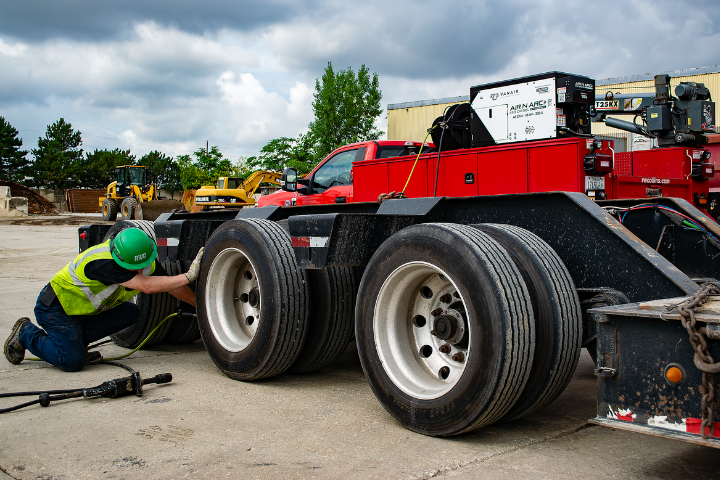
Reciprocating systems require a receiver tank, which adds footprint and weight. Rotary screw systems, especially underdeck or PTO-driven configurations, mount under the vehicle and free the truck bed and hitch. For upfitters building trucks for specific roles, packaging can be as important as output.
4. Operating Temperature and Maintenance
Rotary screw compressors run at 180 to 210°F. Reciprocating units commonly reach 300 to 400°F in mobile applications. Higher temps affect component wear and oil life. Factor maintenance intervals into the total cost comparison, not just purchase price.
5. Upfront Cost vs. Productivity Cost
Reciprocating compressors cost less upfront — rotary screw systems can run approximately 50 percent higher in some configurations. But crews waiting for air, tools underperforming, and systems cycling off add up fast. The lower-cost option is only the better value if it can keep pace with the application.
 Quick spec checklist before you buy:
- What is the highest-demand tool I will run, and what CFM does it require?
- How many hours per shift will the compressor run continuously?
- Do I need to preserve bed space or hitch access?
- What are the ambient temperature conditions at my job sites?
- What is my total budget including installation and expected maintenance?
Which Compressor Fits Which Work Truck Application?
Rather than picking a compressor type by preference, match the technology to the actual work the truck does. The table below maps common work truck applications to the compressor type that fits best.
| Application | Typical Air Demand | Better Fit |
|---|---|---|
| Mechanic / service truck (blow-off, tire inflation, occasional impact tools) | Low to moderate, intermittent | Reciprocating |
| Lube truck / fluid service | Low, intermittent | Reciprocating |
| Contractor truck (framing, roofing, finish work) | Moderate, intermittent to sustained | Either — depends on runtime |
| Field service / utility truck (mixed tools, longer shifts) | Moderate to high, sustained | Rotary screw |
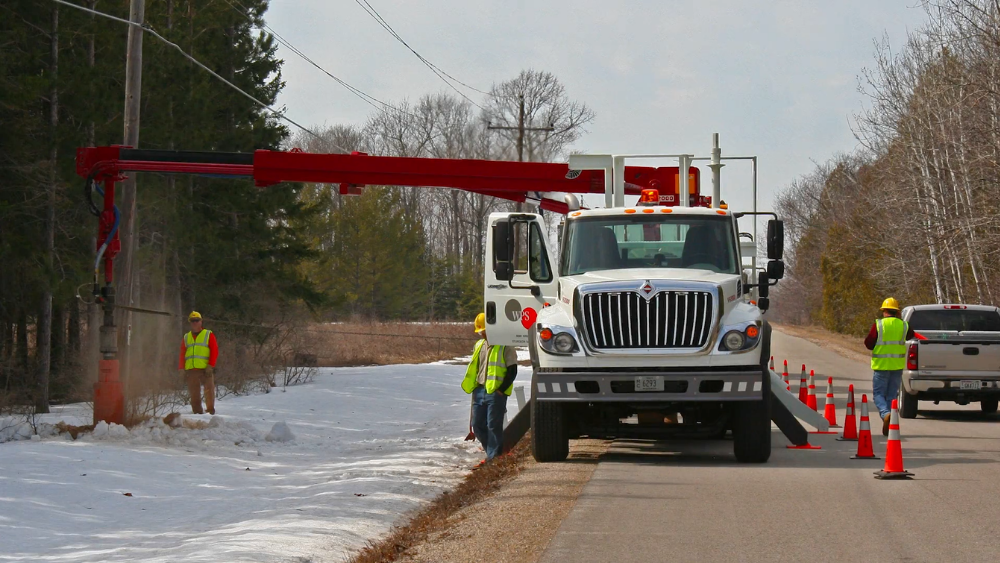
| Utility truck (post pounding, pipe fusion, sewer relining) | High, continuous | Rotary screw |
| Air excavation / vacuum excavation support | Very high, continuous | Rotary screw |
| Gas line charging / pressure testing | High, sustained | Rotary screw |
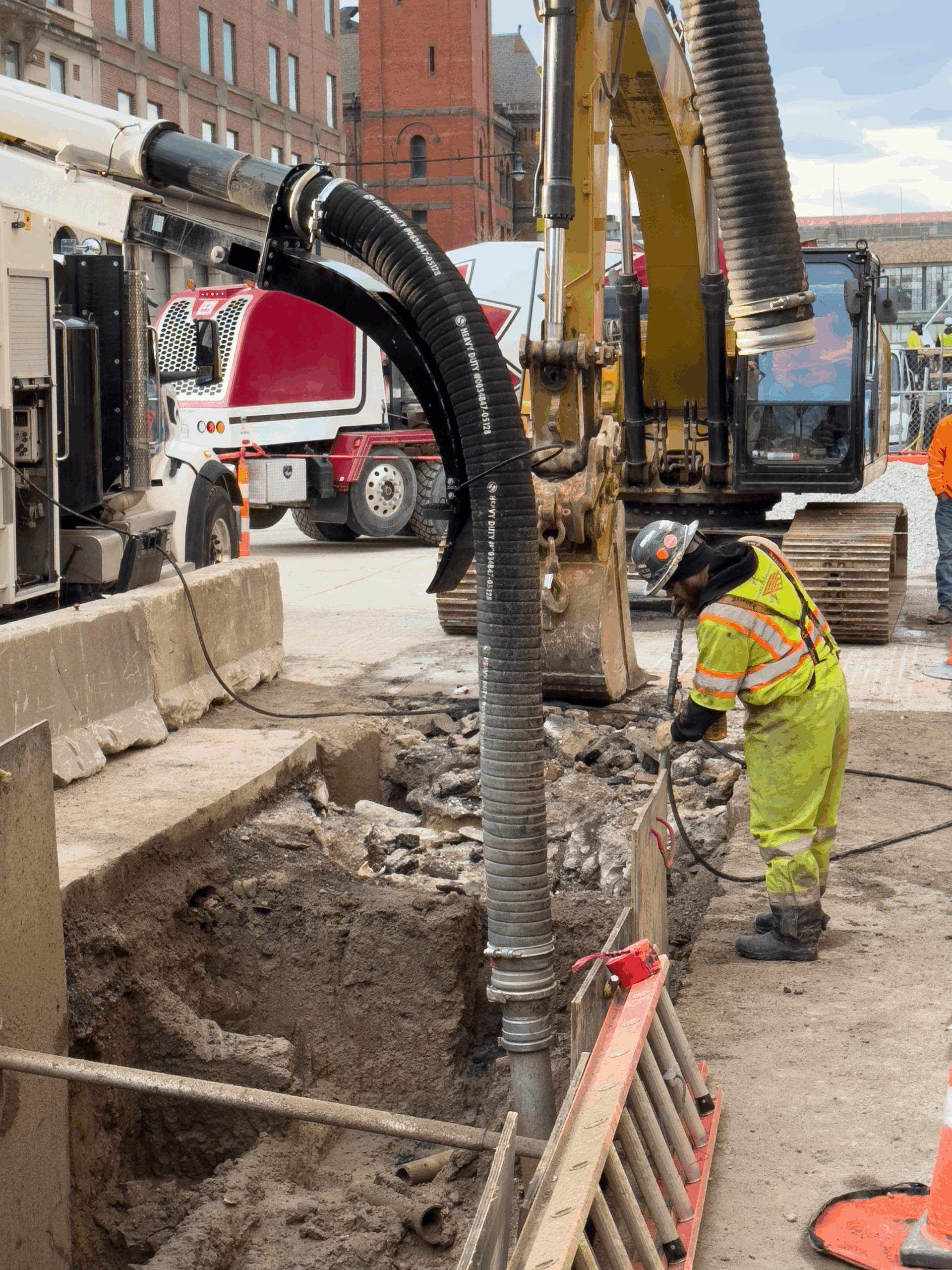
Reading the Table for Your Fleet
The dividing line is sustained air demand. If a crew runs air tools for most of the shift with only short breaks, a reciprocating system will struggle to keep up and may overheat before the job is done. If air use is genuinely intermittent — short bursts followed by meaningful recovery time — a reciprocating setup with the right tank size handles the load at a lower cost.
Contractor and field service trucks often sit in the middle. The honest answer for those applications is to map out a typical day: how many hours of actual tool runtime, how many tools running at once, and how much downtime is acceptable if the compressor needs to recover.
When Rotary Screw Is Worth the Premium
The higher upfront cost of a rotary screw system is easiest to justify when the alternative is a compressor that cannot keep up with the job. Here is where the premium pays off.
Rotary screw advantages in work truck applications:
- 100% duty cycle: Runs continuously without cycling off, critical for air excavation, pipe fusion, post pounding, and other sustained-demand tasks.
- Lower operating temperature: 180 to 210°F versus 300 to 400°F means less heat stress, longer oil life, and more consistent performance in hot conditions.
- Immediate air on demand: No waiting for tank pressure to build. The crew picks up a tool and has air.
- Compact truck integration: PTO-driven underdeck systems mount beneath the vehicle, keeping the bed open and the hitch free.
- Long service life: Built to outlast the trucks they are mounted on, with bearing design lives exceeding 100,000 hours according to Vanair’s FAQ.
Vanair’s PTO-driven underdeck systems use the truck’s own engine to power rotary screw compressors up to 1,000 CFM, with under-vehicle mounting that preserves bed space and hitch access.
The premium is hardest to justify when air demand is genuinely low and intermittent. Buying a rotary screw for a mechanic truck that uses air for tire checks and occasional blow-off is real money left on the table.
When Reciprocating Is the Smarter Buy
Reciprocating compressors get a bad reputation in some comparisons, but for the right application, they are the correct choice. Buying rotary screw for low-demand intermittent work is overkill, and it costs more than it needs to.
Where reciprocating wins:
- Intermittent tool use: Tire inflation, blow-off, occasional impact wrench work — a receiver tank handles the demand without a compressor that runs all day.
- Lower total cost: For fleets running many trucks in lower-demand roles, the cost difference across multiple units adds up. Reciprocating systems are a practical choice for mechanic trucks, lube trucks, and light contractor setups.
- Fluctuating workloads: Applications where air demand varies widely day to day handle on-off cycling well by design.
- Simpler maintenance: A straightforward service profile most in-house fleet teams can handle without specialized training.
Worth stating plainly: Reciprocating does not mean low quality. It means optimized for a different use pattern. A well-matched reciprocating system on the right truck will outperform an oversized rotary screw specified without regard to actual air demand.
A Simple Decision Framework for Buyers
Use this framework to narrow the decision before talking to a distributor or upfitter.
Start Here: Two Questions
1. How long does your crew run air tools in a typical shift?
- Most of the shift, or continuously for extended periods → Rotary screw
- Short bursts with meaningful downtime between uses → Reciprocating
2. Does your truck layout require preserving bed space or hitch access?
- Yes, bed and hitch access are critical → Rotary screw (underdeck configurations available)
- No, a tank and abovedeck mounting work fine → Either type can work
| Consideration | Points to Rotary Screw | Points to Reciprocating |
|---|---|---|
| Duty cycle | Continuous or near-continuous | Intermittent, on-off |
| CFM requirement | Above 60 CFM | Below 60 CFM |
| Truck packaging | Space-constrained, underdeck preferred | Tank and abovedeck acceptable |
| Budget | Higher upfront acceptable | Lower upfront required |
| Application type | Utility, excavation, pipe work, field service | Mechanic, lube, light contractor |
If most of your answers point the same direction, the decision is straightforward. If they split across both columns, the application details matter more than the general guidelines — and that is exactly when talking to someone with work truck application experience makes a difference.
Not sure which setup fits your truck and application? Contact a Vanair® expert or find a local distributor to get a recommendation based on your actual duty cycle, tool requirements, and truck configuration — not just a spec sheet comparison.