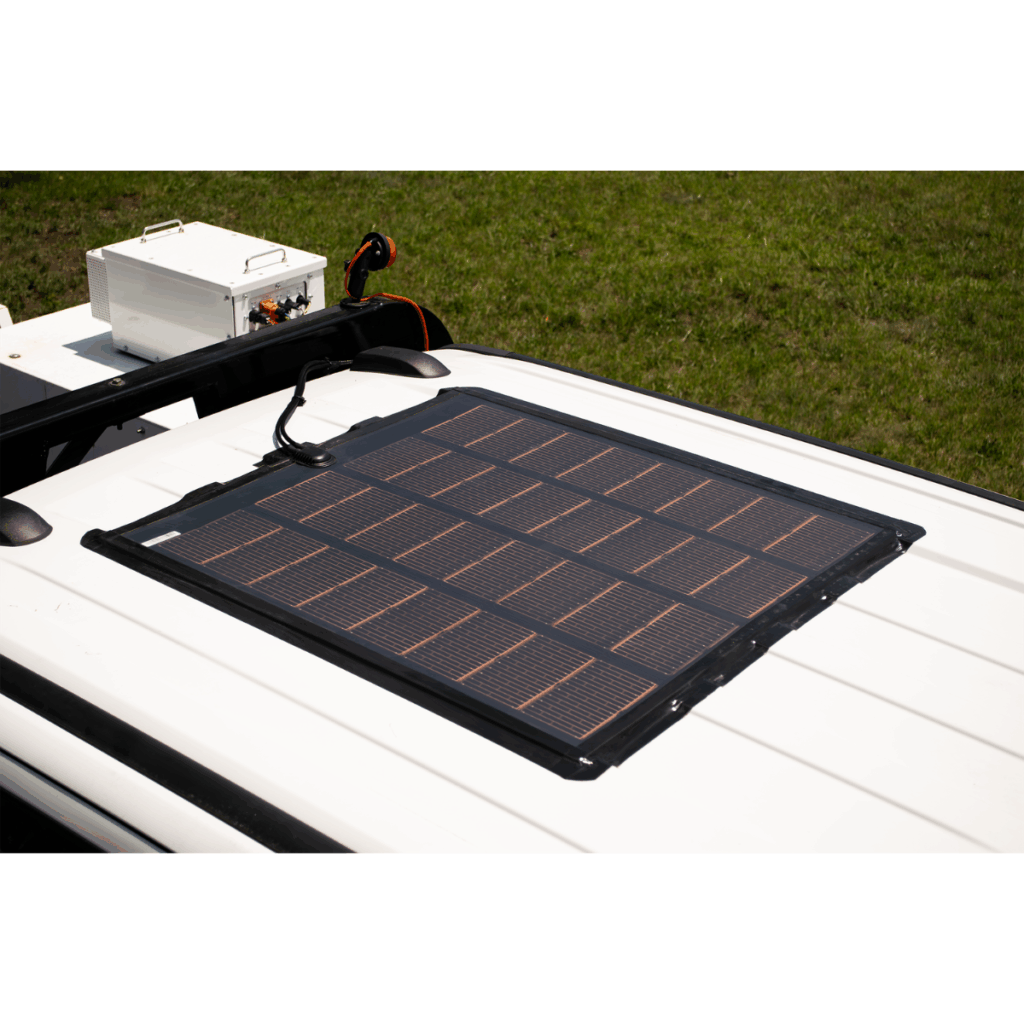
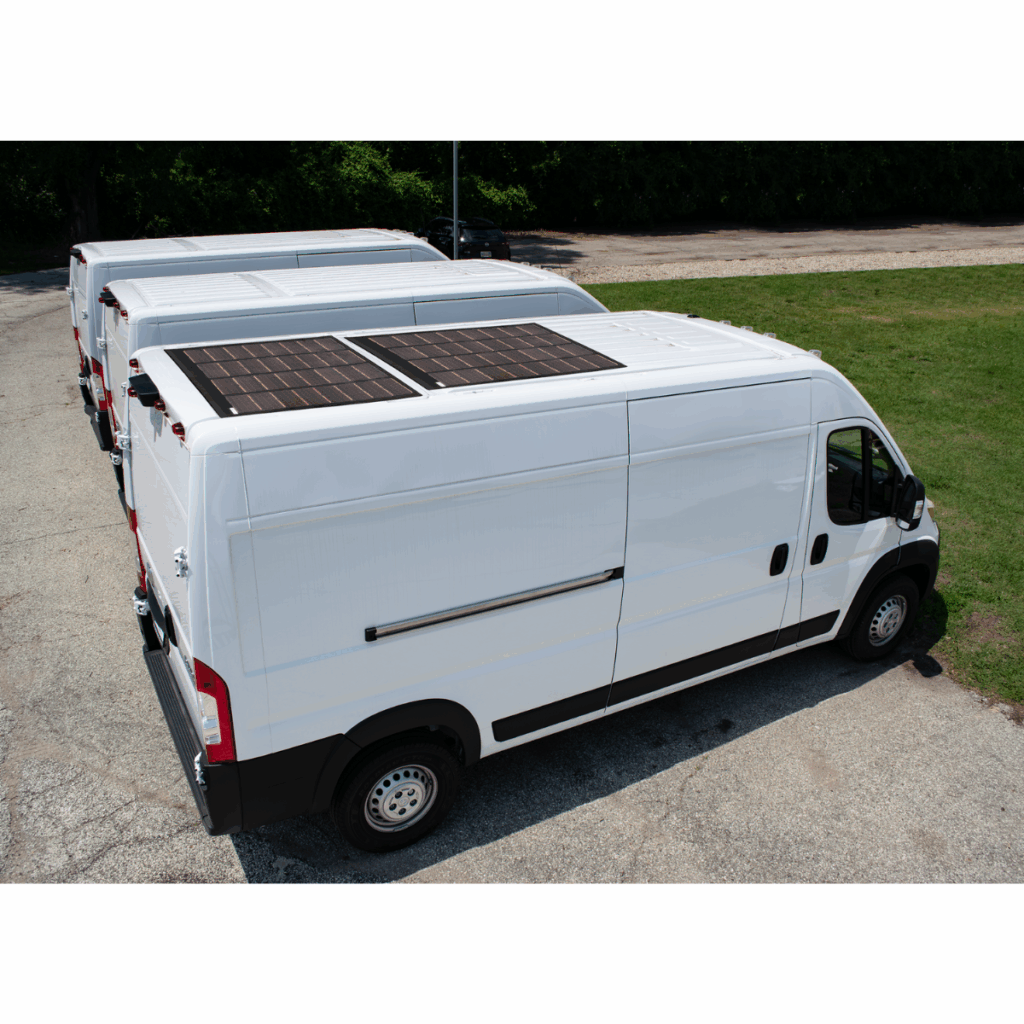
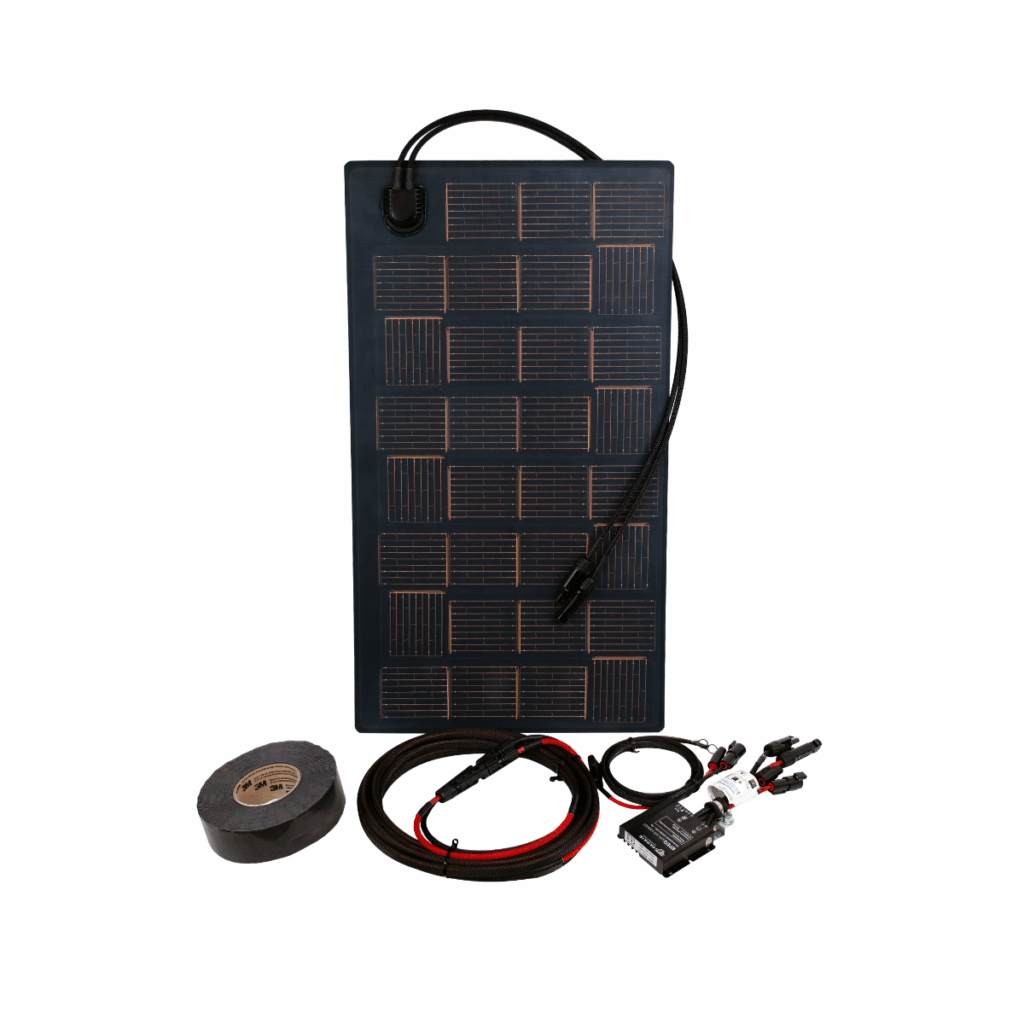
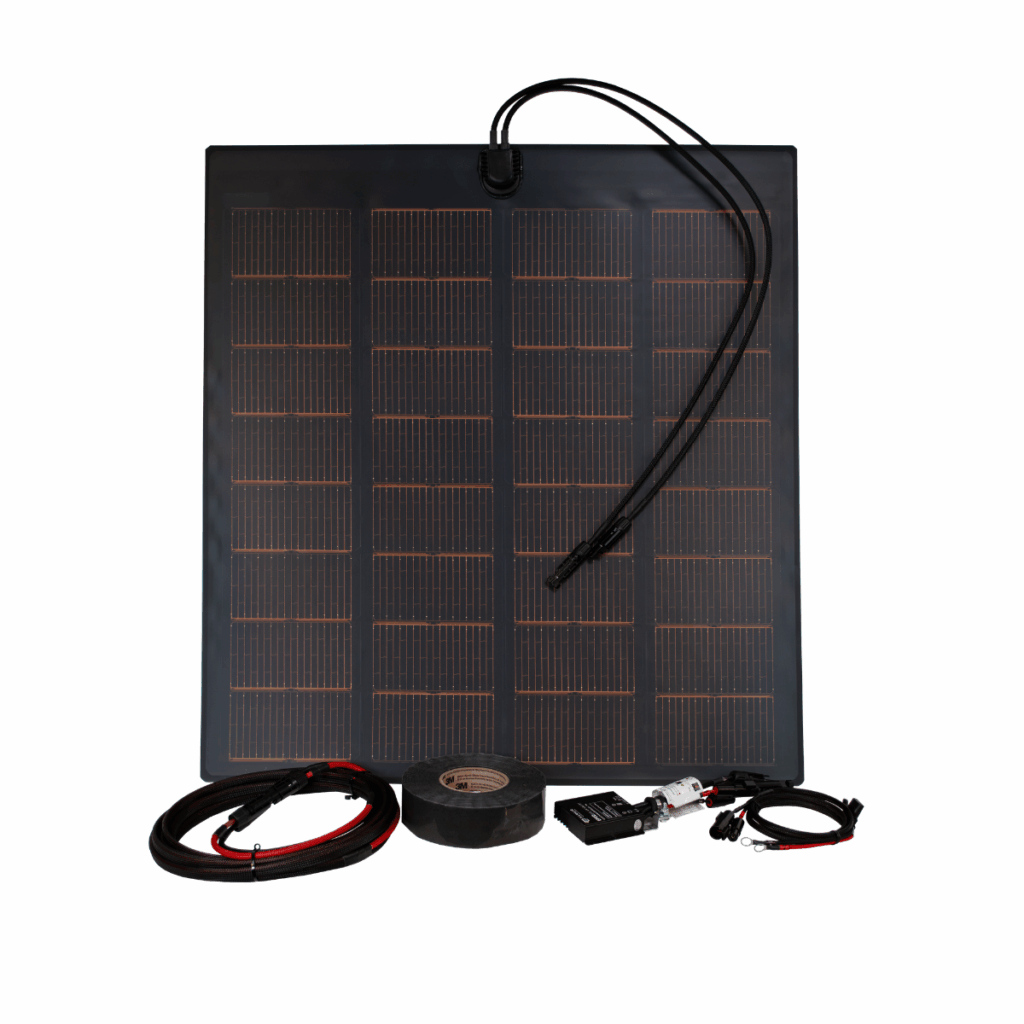
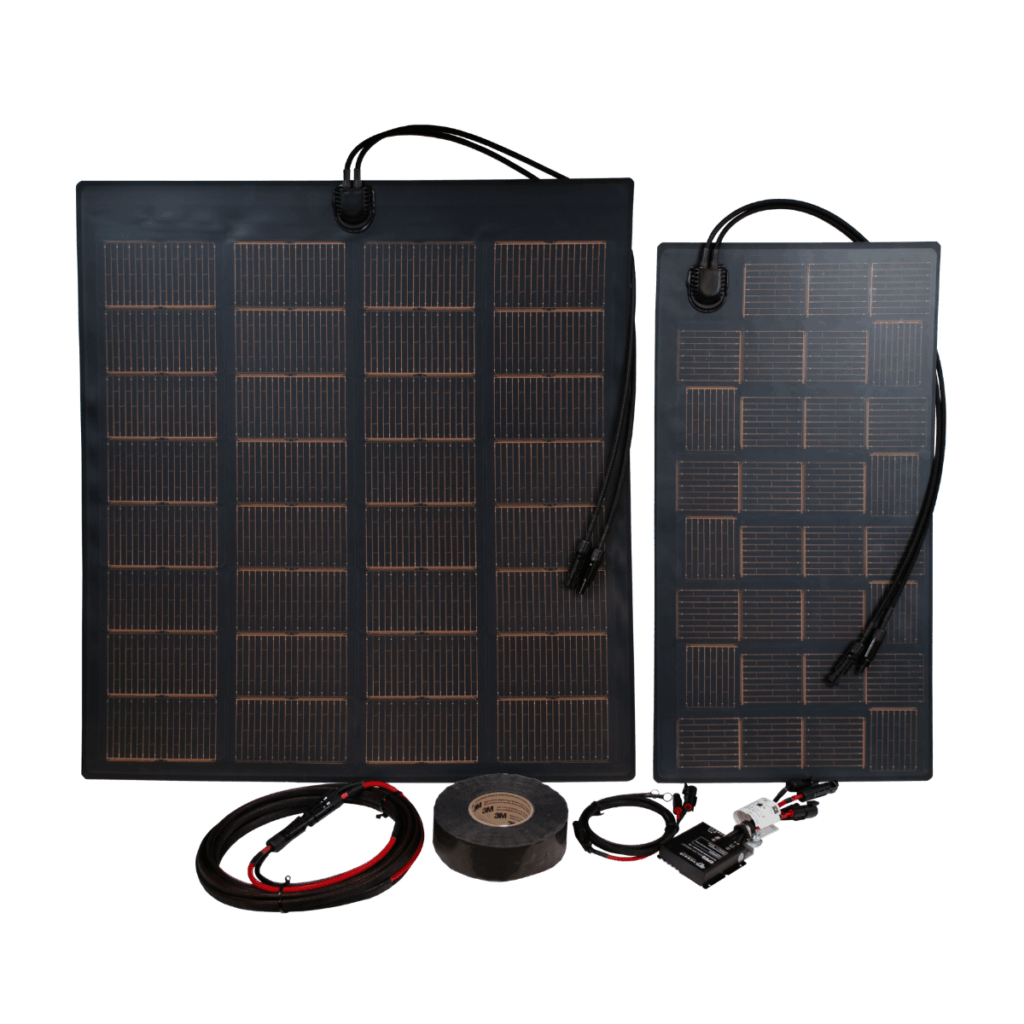
EPEQ® Solar Assist™ is a patented solar charging solution designed specifically for work trucks, fleets, and mobile equipment for 12V and 48V platforms. It captures solar energy and uses advanced Maximum Power Point Tracking (MPPT) technology to maintain battery charge, offset parasitic electrical loads, reduce downtime, and extend battery life. Its UL 1741-certified and IP67-rated MPPT charging harvests up to 45% more usable energy than Pulse Width Modulation (PWM) controllers, and the shade-resilient mesh grid design, with more than 2,100 conductive pathways, adds up to 20% more real-world production. The Solar Assist™ panels are 1/8-inch thick, frameless, and conform to curved surfaces without traditional mounting hardware.
Key Benefits
• Reduces battery failures and jump starts
• Offsets parasitic electrical loads while vehicles are parked
• Extends battery, alternator and starter life
• Provides clean, renewable power without idling
• Improves fleet uptime and productivity
• Engineered specifically for work truck applications